
Karachi, Sindh · Court Marriage Legal Services
Court Marriage in Karachi: Fees, Process, Documents and Nikah Registration
Court Marriage Lawyers in Karachi for Free-Will Nikah, Legal Documentation and Union Council Registration
Same-Day Nikah, Online Nikah, Affidavits, Witnesses and Marriage Registration Certificates
Court marriage in Karachi is the expression commonly used for a lawful free-will marriage arranged with legal assistance. The first step in any such matter is to identify the age and marital status of both parties from their CNICs, whether either was previously married and what record proves it, which witnesses are available, and which Union Council or Cantonment Board has jurisdiction over the venue. Only then can the Nikah, the Nikah Nama and the registration be arranged in the correct order.
WhatsApp +92 333 1127837Call +92 333 1127837
Karachi offices: Main Jami Commercial, Phase 7, DHA · Muneer Mobile Mall, Block 17, Gulistan-e-Jauhar. Fee packages from PKR 20,000. Calls are taken from 10am to 10pm and WhatsApp is answered around the clock.

Advocate-Led Oversight on Every Karachi Nikah File
The Advocates Who Supervise Your File
Karachi files are handled by advocates of the High Court and a family-law specialist, with senior review before the file is closed.
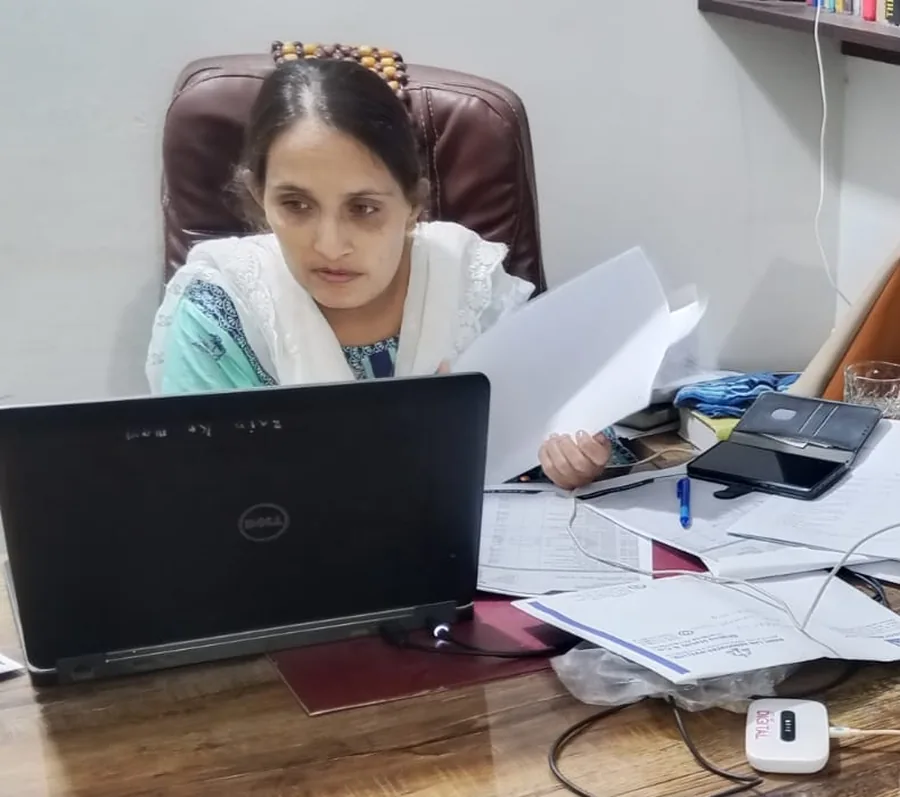

- Sobia Mohsin Shah, Advocate — family law specialist: eligibility, the bride’s free-will affidavit and Nikah Nama entries.
- Zaheer Ahmed Qazi, Advocate High Court — Nikah coordination, witnesses and Union Council or Cantonment Board registration.
- M. Mohsin Ali Shah, M.A., LL.B. — consulting lawyer and Chairman of Qanoon Group Pakistan; initial assessment, allocation and senior review.
What Court Marriage in Karachi Actually Means
No Courtroom and No Judge: What the Term Actually Describes
A court marriage in Karachi is not a courtroom trial and is not conducted by a judge. For a Muslim couple there is no separate statutory category under that name. The expression describes a lawful, free-will Nikah in which an adult bride and groom marry with proper identity verification, witnesses, affidavits where required, a correctly completed Nikah Nama and statutory registration.
A court becomes relevant to a court marriage only where a separate matter arises, such as a protection petition or a criminal complaint. It is never a step in the marriage itself, and any adviser who says otherwise is describing something that does not exist in Pakistani practice.
What the Service Covers, From the CNIC Check to the Certificate
Our court marriage service covers eligibility and identity review, the bride’s free-will affidavit where applicable, arrangement of the Nikah with an authorised Nikah Khawan or licensed Nikah Registrar, witness coordination, careful completion of the Nikah Nama, registration with the competent authority, and the Computerised Marriage Registration Certificate that follows.
Why Karachi Couples Choose a Documented Free-Will Nikah
Couples choose a court marriage in Karachi for practical reasons rather than legal ones. Its legal validity is identical to that of any other lawful registered Muslim marriage.
| Reason | What it means in a court marriage |
|---|---|
| Free consent | A court marriage documents the free will of both adults clearly |
| Privacy | A court marriage involves fewer participants, though registration still creates a government record |
| Speed | A court marriage can be coordinated quickly where documents and witnesses are ready |
| Affordability | A court marriage avoids event expenses; validity never depended on the size of a wedding |
| Documentation | A properly recorded court marriage reduces later disputes about consent and identity |
| Distance | A court marriage can proceed where one party is outside Karachi or outside Pakistan |
The label “court marriage” does not give spouses greater rights than any other lawful registered Muslim marriage. It describes how the marriage is arranged, not its legal effect.
Legal Requirements for Court Marriage in Karachi
Minimum Age Under the Sindh Act: 18 Years for Both Parties
The minimum legal age of marriage is 18 years for both male and female. In Sindh a person under eighteen is a child for marriage purposes under the Sindh Child Marriages Restraint Act, 2013. Age documents are checked before any court marriage is arranged, and an underage matter is not taken forward.
Free Consent, Coercion and the Wali Question
Both parties must be legally competent and marrying voluntarily, without coercion, threat or fraudulent identity. Where a free-will affidavit is required it is the bride’s affidavit, attested by a licensed Justice of Peace or Notary Public. There is no corresponding requirement for the groom. An affidavit supports the documentary record; it does not replace the Nikah, the witnesses, the Nikah Nama or registration.
Witnesses: Two Adult Males, or One Male and Two Females
For a Sunni Nikah, two adult sane Muslim male witnesses are required, or one male and two female witnesses. For a Shia Nikah, witnesses are not required in the same religious sense, but Pakistani registration practice still requires them for the court marriage documentation. Witness CNICs must be available on the day.
Registration Is Mandatory Under Section 5 of the MFLO
Section 5 of the Muslim Family Laws Ordinance, 1961 requires every marriage solemnised under Muslim law to be registered, and a court marriage is no exception. Where the Nikah is not solemnised by the licensed Nikah Registrar himself, the person who solemnises it must report it for registration. Failure to do so is an offence under section 5(4).
Which Office Holds the Record: Union Council, Cantonment Board or TMA
Karachi is the most complicated of the major cities for this question, simply because of its size. The city is divided across several districts, each with its own Union Councils, and it also contains cantonment areas where the Cantonment Board registers the court marriage instead.
The rule that decides it: the authority follows the place where the Nikah takes place, not the couple’s home address. Confirming the venue before fixing the date is the first thing we check in every file.
| Where the court marriage takes place | Registering authority |
|---|---|
| Most Karachi localities | The Union Council for that locality |
| Karachi, Clifton or Faisal Cantonment areas | The relevant Cantonment Board |
| Korangi Creek or Manora Cantonment | The relevant Cantonment Board |
| Outside Karachi | The Union Council, Cantonment Board or TMA for that place |
What NADRA Does, and What It Does Not Do
NADRA does not solemnise the Nikah and does not directly register a court marriage. The Computerised Marriage Registration Certificate is issued by the Union Council, Cantonment Board or Town or Tehsil Municipal Administration. NADRA verifies and supports the record through CRMS once that authority has entered it. Applying to NADRA before the local authority has registered the marriage produces nothing.
The Nikah and Registration Process, Step by Step
A well-prepared court marriage file separates the Nikah itself from the administrative registration that follows. That is what prevents the common mistake of promising that every certificate is issued the same day.
- Initial contact — the couple share age, CNIC status, marital status and a preferred date for the court marriage.
- Eligibility review — whether both parties are legally eligible and what further documents the court marriage requires.
- Identify the registering authority for the intended venue.
- Document preparation — the bride’s affidavit where applicable, attested by a Justice of Peace or Notary Public.
- Haq Mehr agreed, with the prompt and deferred split settled before the court marriage date.
- Nikah arrangement with an authorised Nikah Khawan or licensed Nikah Registrar, and the witnesses confirmed.
- Nikah solemnisation — offer and acceptance completed in the presence of witnesses and dower recorded.
- Nikah Nama completion and signature by the parties and the witnesses.
- Registration through the authority identified at step three.
- Post-court-marriage documentation — the Computerised Marriage Registration Certificate and the NADRA record update.
A Worked Example: From the First Call to the Certificate
Two adults, both with valid CNICs, neither previously married, the Nikah to be held at the Gulistan-e-Jauhar office. Day one: CNICs checked, marital status confirmed, the bride’s free-will affidavit drafted and the Nikah Khawan booked. Day two: the affidavit is attested, the Nikah is solemnised before the required witnesses, dower is recorded and the Nikah Nama is completed and signed.
The signed Nikah Nama is then reported to the licensed Nikah Registrar and entered in the register of the competent Union Council, Cantonment Board or TMA. The computerised certificate follows from that office, commonly within two to four weeks, and that timing belongs to the authority rather than to us. A previous marriage, a foreign passport or a protection concern lengthens the file and is quoted separately.
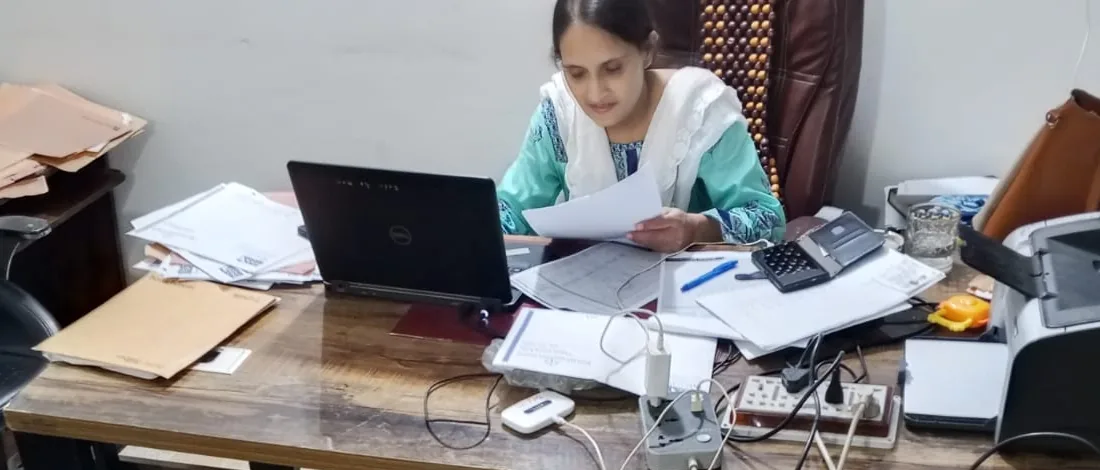
What to Bring: Documents for a Court Marriage in Karachi
There is no single document list that fits every court marriage. The correct set depends on nationality, marital history and the facts of the proposed marriage.
| Document | Provided by | When required |
|---|---|---|
| Original CNIC, NICOP or passport, with copies | Bride and groom | Always |
| CNIC copies of witnesses | Witnesses | Always |
| Recent passport-size photographs | Bride and groom | Where the office requires them |
| Free-will affidavit | Bride, attested by Justice of Peace or Notary Public | Where applicable |
| Divorce, talaq or khula record | Party previously married | Where applicable |
| Death certificate of previous spouse | Widow or widower | Where applicable |
| Passport, visa and lawful-stay documents | Foreign national party | Where applicable |
| Wakalat Nama or Special Power of Attorney | Party acting through a lawful Wakeel | Where applicable |
An embassy no-objection certificate is not a requirement for court marriage registration. Where a document on this list is difficult to obtain, say so at the first conversation rather than on the day of the Nikah.
Court Marriage Fees in Karachi: Packages From PKR 20,000
Routine court marriage fees in Karachi generally range from PKR 20,000 to PKR 30,000, depending on documentation, registration charges, urgency and the nature of the legal assistance involved. Optional and case-specific work is quoted separately rather than hidden inside an unclear same-day promise.
| Service | Fee guide | Scope |
|---|---|---|
| Routine court marriage / free-will Nikah | PKR 20,000 – 30,000 | Consultation, eligibility review, routine documentation, Nikah coordination, Nikah Nama assistance |
| Witness facilitation | Quoted separately | Where the couple cannot bring their own witnesses |
| Urgent or same-day court marriage | Quoted after review | Depends on documents, availability of parties and drafting |
| Online Nikah, proxy or overseas participation | Quoted after review | Identity, authority documents and cross-border papers need separate review |
| Second marriage under section 6 | Quoted after review | Arbitration Council application is separate from a routine court marriage |
| Computerised marriage certificate assistance | Separate where applicable | Registration and certificate processing depend on the competent authority |
A Same-Day Nikah Does Not Mean a Same-Day Certificate
Where the parties are eligible and the documents are ready, the Nikah and the immediate paperwork of a court marriage can often be coordinated the same day. Registration and the Computerised Marriage Registration Certificate are separate administrative steps and may require additional processing time. Any firm promising both on the same day is promising something it does not control.
Fee Comparison Across Karachi, Lahore, Islamabad and Rawalpindi
Karachi court marriage fees are stated for the scope described on this page. Fees and timing elsewhere differ with local registration arrangements and the facts of the case.
| City | Routine court marriage fee | Completion |
|---|---|---|
| Karachi | PKR 20,000 – 30,000 | Same day possible; certificate follows |
| Lahore | From PKR 18,750 | Same day possible; certificate follows |
| Rawalpindi | From PKR 20,000 | Same day possible; certificate follows |
| Islamabad | Varies by case and local requirements | Depends on documents and registration |
How This Differs From a Conventional Wedding
Court marriage and a conventional wedding are not separate legal categories. For Muslim couples the same rules on valid Nikah, free consent, documentation and registration apply to both.
| Aspect | Court marriage | Conventional wedding |
|---|---|---|
| Legal validity | Depends on valid Nikah, capacity and free consent | The same requirements apply |
| Registration | Required under section 5 MFLO 1961 | The same requirement applies |
| Time | Court marriage steps can be completed quickly | Event timing varies; legal steps identical |
| Privacy | Fewer participants, but a government record is still created | A government record is still created |
Online Nikah for Parties Outside Karachi or Abroad
Where one party is outside Karachi, outside Pakistan, or unable to attend in person, a court marriage may still proceed through a lawful Wakeel arrangement supported by written authority, identity verification, witnesses and proper documentation.
The conditions of a valid Nikah do not change in an online court marriage: identification, free consent, Haq Mehr, competent witnesses, and offer and acceptance in one sitting. Because a Vakil attends in person, the one-sitting requirement is satisfied without argument, which is why that route is the more conservative choice.
Special Cases: Second Marriage, Divorce, Overseas and Foreign Nationals
Second Marriage
Where a Muslim man already has a wife, section 6 of the Muslim Family Laws Ordinance, 1961 requires the prior written permission of the Arbitration Council. A routine court marriage package must not be used to bypass that process.
Divorced or Widowed Parties
The lawful end of the earlier marriage should be documented before a court marriage is arranged. Divorce, khula or death records, and any applicable iddat issue, are checked first.
Family Opposition or Protection Concerns
Where threats, unlawful restraint, violence, an abduction allegation or an FIR exists, the matter may require separate protective or criminal-law advice. Court marriage documentation alone is not a substitute for an appropriate legal response, and no adviser can guarantee an outcome where a separate dispute exists.
Foreign National Marriage
Passport, lawful-stay documents, marital-status records and the intended overseas use of the court marriage record should be checked before the ceremony is fixed.
Nikah Nama Corrections
Incorrect names, CNIC details, addresses, Haq Mehr or marital-status entries create later problems. Corrections are addressed through the competent authority rather than by informal alteration.
What Goes Wrong, and What It Costs to Put Right
Three faults account for most of the repair work we see. A name or CNIC digit entered wrongly in the Nikah Nama; dower left blank or written as a figure nobody agreed; and a Nikah solemnised inside a cantonment but reported to a Union Council with no power to register it.
Each is cheap to avoid and slow to repair. Correcting an entered record is a formal application to the registering authority, not a pen stroke, and once the record has been relied on for a visa or a NADRA certificate it may need a declaratory suit. Checking every column before anyone signs costs nothing.
Practical Tips for a Court Marriage in Karachi
- Settle the venue early, because it decides which authority registers the court marriage.
- Agree Haq Mehr, and its prompt and deferred split, before the court marriage date.
- Collect witness CNICs in advance rather than on the day.
- Never sign a Nikah Nama while a column is blank or incomplete.
- Expect the certificate to follow the court marriage rather than accompany it.
Areas We Cover for Court Marriage in Karachi
Court marriage assistance is provided to couples from across the city, subject to the facts and the competent registration jurisdiction of each marriage.
Gulistan-e-Johar · Gulshan-e-Iqbal · Karachi East · Karachi South · Saddar · Clifton · DHA · PECHS · Shahrah-e-Faisal · Tariq Road · Bahadurabad · Malir · Korangi · Scheme 33 · North Nazimabad · North Karachi · Federal B Area · Liaquatabad · Nazimabad · Landhi · Model Colony · University Road
Speak to a Court Marriage Lawyer in Karachi
Confirm eligibility, documents, the fee and an available Nikah time before you travel. Share your age, CNIC status, marital status and preferred date so the correct legal route can be identified.
Confidential. No documents are needed to make the first enquiry.
Frequently Asked Questions About Court Marriage in Karachi
What is a court marriage in Karachi?
Court marriage in Karachi means a lawful free-will Nikah with proper legal documentation, witnesses, an affidavit where required, a completed Nikah Nama and statutory registration. It is a simple legal marriage process for consenting adults.
What is the minimum age for marriage in Sindh?
18 years for both male and female. In Sindh a person under eighteen is a child for marriage purposes under the Sindh Child Marriages Restraint Act, 2013, and underage matters are not processed.
What are the court marriage fees in Karachi?
Routine court marriage fees generally range from PKR 20,000 to PKR 30,000, depending on documentation, registration requirements, urgency and case complexity. Optional or case-specific work is quoted separately.
What documents do we need to bring?
Ordinarily CNICs and copies, photographs, witness CNICs, an affidavit where required, and a divorce or death certificate where either party was previously married. Foreign nationals and overseas cases require further documents.
How long does the whole process take?
Where documents are complete and both parties are eligible, the Nikah and immediate documentation can be completed quickly. Registration and the computerised certificate may require additional time.
How many witnesses are required for a court marriage?
For a Sunni Nikah, two adult sane Muslim male witnesses, or one male and two female witnesses. For a Shia Nikah, witnesses are not required in the same religious sense, but registration practice still requires them.
Can parents stop an adult court marriage?
Adult consenting parties who are legally eligible have the right to marry. Where there is family opposition, proper documentation and legal advice matter, and protection issues should be addressed separately.
Does NADRA register a court marriage?
No. The Computerised Marriage Registration Certificate is issued by the Union Council, Cantonment Board or TMA. NADRA verifies and supports the record through CRMS after that authority has entered it.
Can a married man contract another court marriage?
Not without prior written permission of the Arbitration Council under section 6 of the Muslim Family Laws Ordinance, 1961. A routine court marriage package must not be used to bypass that requirement.
Is a Shari’a Nikah without registration enough?
A Shari’a Nikah may be religiously valid where its conditions are met, but registration is compulsory under section 5 and is what makes the marriage provable. Both steps are recommended.
Our Karachi Offices and How to Reach Us
Court marriage in Karachi is straightforward when the documents are assembled first and the correct registering authority is identified before the date is fixed. It becomes difficult when the Nikah is done in haste and the registration is left for later.
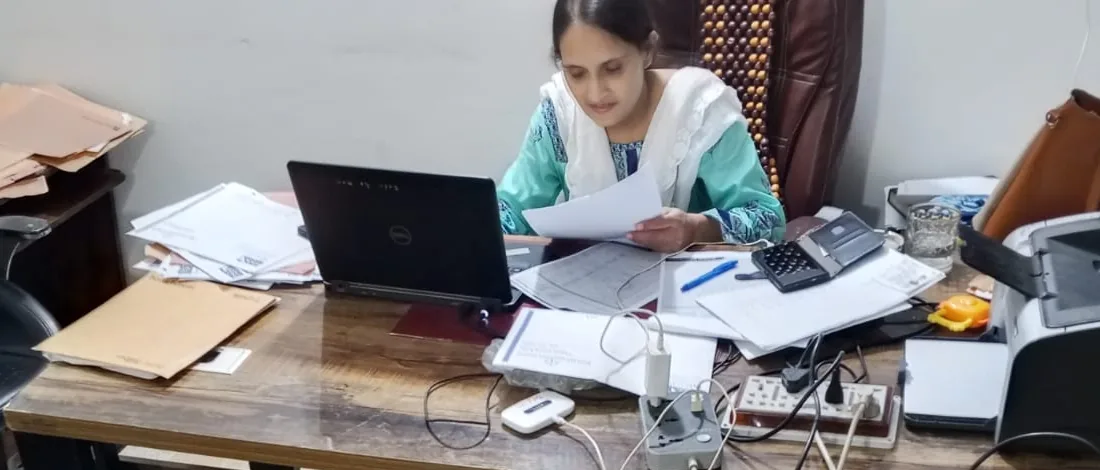
Court Marriage Karachi Law Associates — DHA
Mezzanine Floor, Main Jami Commercial, Phase 7, DHA, Karachi
Gulistan-e-Jauhar: Mezzanine Floor, Muneer Mobile Mall, Block 17, Gulistan-e-Jauhar, Karachi
Hours: calls 10am–10pm; WhatsApp answered 24/7
Call or WhatsApp: +92 333 1127837
Email: info@courtmarriagekarachi.pk
Services: Court marriage, Online Nikah, Shari’a Nikah, Nikah Nama, marriage registration and computerised certificate assistance
Court marriage matters are also handled in Lahore, Islamabad and Rawalpindi, and through associate counsel in Multan and Faisalabad.
Related Reading
- Court Marriage in Lahore
- Court Marriage in Rawalpindi
- Court Marriage in Islamabad
- Online Nikah and Nikah Registration
- Qazi and Nikah Khawan services
Reviewed by: M. Mohsin Ali Shah, M.A., LL.B. — Consulting Lawyer and Chairman, Qanoon Group Pakistan
Karachi team: Sobia Mohsin Shah, Advocate · Zaheer Ahmed Qazi, Advocate High Court
Published by: Court Marriage Karachi Law Associates — Karachi, Lahore, Islamabad and Rawalpindi
Last updated: 3 November 2026
Sources: The Muslim Family Laws Ordinance, 1961 (VIII of 1961), sections 5 and 6; the Sindh Child Marriages Restraint Act, 2013.
This page provides general information on Pakistani law and is not legal advice on any particular case. Court marriage requirements and timelines vary by office and by the facts of the matter.